Sunday Beer thoughts on packaging

Sunday beer thoughts…… I recently had the honor of judging a few styles of IPA for a statewide competition. Many of the beers were very good but a few stood out for the brightness and freshness of their hop aroma. I suspect that those examples were packaged week with low oxygen pickup.

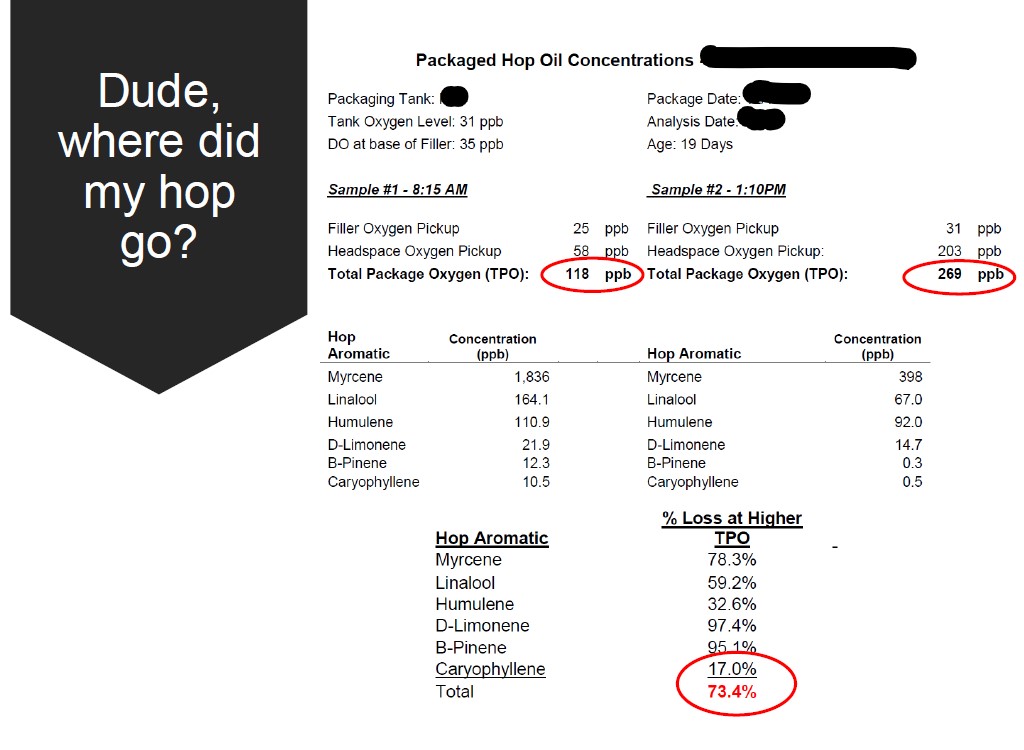
Hop aromatics are very sensitive to oxidation. The included slide shows the huge impact of a slight increase in oxygen levels in hoppy beer styles. Packaging these beer styles is very challenging. It is akin to capturing lighting in a bottle (or can these days). The increase of 151ppb oxygen pickup resulted in a more than 73% reduction on hop aromatics for the selected hop aromatics.

Reducing oxygen pickup during beer packaging is crucial for preserving the delicate hop aromatics that give beer its unique and complex flavors. Hop aromatics are the volatile compounds that contribute to the aroma and taste of beer, and they are particularly sensitive to oxidation. When exposed to oxygen, these compounds can quickly break down, resulting in a loss of flavor and aroma. This can lead to a beer that tastes flat or stale, with muted hop flavors and aromas.

To preserve hop aromatics, brewers take several measures during the packaging process. They may use oxygen scavengers or purge bottles and cans with inert gases to reduce oxygen levels. They also carefully monitor and control the temperature and pressure during the filling process to minimize exposure to oxygen. By reducing oxygen pickup during the packaging process, brewers can ensure that their beer retains its fresh and complex hop aromatics, providing a more enjoyable drinking experience for consumers.

Go make (and package) great beer!
Sunday Beer Thoughts on Quality

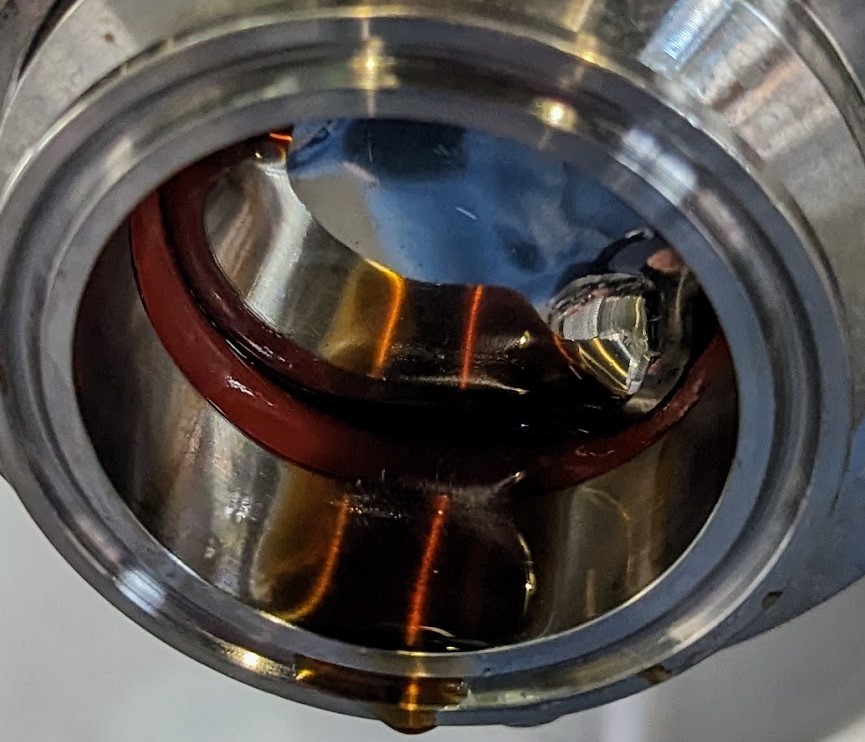
Cleaning valves after transferring beer in a brewery is crucial for maintaining the quality of the beer and preventing contamination. Cross-contamination of yeast strains, bacterial infection, and biofilms are all potential risks when valves are not properly cleaned.

Bacterial infection is the largest risk associated with inadequate cleaning of valves. Even a small amount of bacteria can quickly multiply and contaminate the entire batch of beer. This can lead to off-flavors and aromas, as well as potential large scale product recalls. Bacterial infections can be difficult to detect without a comprehensive lab program, as the symptoms may not appear until after the beer has been packaged and distributed.

Clean, healthy yeast strains are a vital component of beer production, and different strains are used for different beer styles. When valves are not cleaned properly, yeast strains can mix, leading to unwanted flavors and aromas in the beer. This can be particularly problematic for breweries that produce a wide variety of beer styles, as cross-contamination can result in inconsistent beer quality and dissatisfied customers.

Biofilms are another concern when it comes to valve cleaning. Biofilms are slimy layers of microorganisms that can form on surfaces and create a protective barrier against cleaning agents. Once established, biofilms can be difficult to remove and can harbor bacteria and other contaminants. If biofilms are present in valves, they can contaminate the beer and lead to quality issues.

To prevent these potential issues, it is important for breweries to implement a thorough cleaning and sanitation program that includes cleaning and sanitizing valves immediately after use. This should include regular cleaning and disinfection of all valves and associated equipment, as well as testing for microbial contamination. Proper cleaning and sanitation protocols can help to ensure that the beer produced is of high quality and free from contamination, leading to happy customers and a successful brewery.

Monday beer thoughts…..

Monday beer thoughts…..Quality is a critical aspect of any successful brewery, and it starts at the top. The leadership team sets the tone for the entire company and establishes the company’s culture, values, and priorities. When quality is a top priority for the leaders, it sends a clear message to the rest of the organization that quality is essential and that every employee is expected to contribute to it. The leaders must set high standards for quality and ensure that they are consistently met. This involves investing in the necessary resources, providing employees with the right tools and training, and establishing effective quality control measures. By prioritizing quality at the top, organizations can improve customer satisfaction, increase efficiency, and build a strong reputation in their industry.

Go make great beer!

Capturing Carbon Dioxide

With carbon dioxide shortages and price increases, this topic keeps coming up.

Spunding valves are an increasingly popular way for breweries to naturally carbonate their beer. The process is simple: the brewery attaches a spunding valve to their fermenter, which allows carbon dioxide to be captured in the beer while allowing excess carbon dioxide to safely vent off. This allows the beer to naturally carbonate in fermentation without the need for tanks of CO2. Based on the temperature and style of beer, some minor touch up of CO2 may be needed, but this is much less that is traditionally needed with fermentation at atmospheric pressure.

There are many benefits to using spunding valves. First, it is a much cheaper way to carbonate beer. Why pay for gas that the process is already producing? Additionally, it gives the beer a more natural, “craft” feel.

Overall, spunding valves are a great way for breweries to save money and produce naturally carbonated beer. If you’re looking to add a natural carbonation process to your brewery, consider using a spunding valve.

Always clean your pressure reliefs when cleaning you tanks and never pressurize a tank higher than it’s rated for.

https://macgparts.com/products/spunding-valve?_pos=1…